Oscar Farrell: The Musician Making UK Garage for the Comedown
Who is Oscar Farrell? The London future-garage producer and Sampha's bassist, signed to George Daniel's dh2, behind So Far South and Birds Fly In.
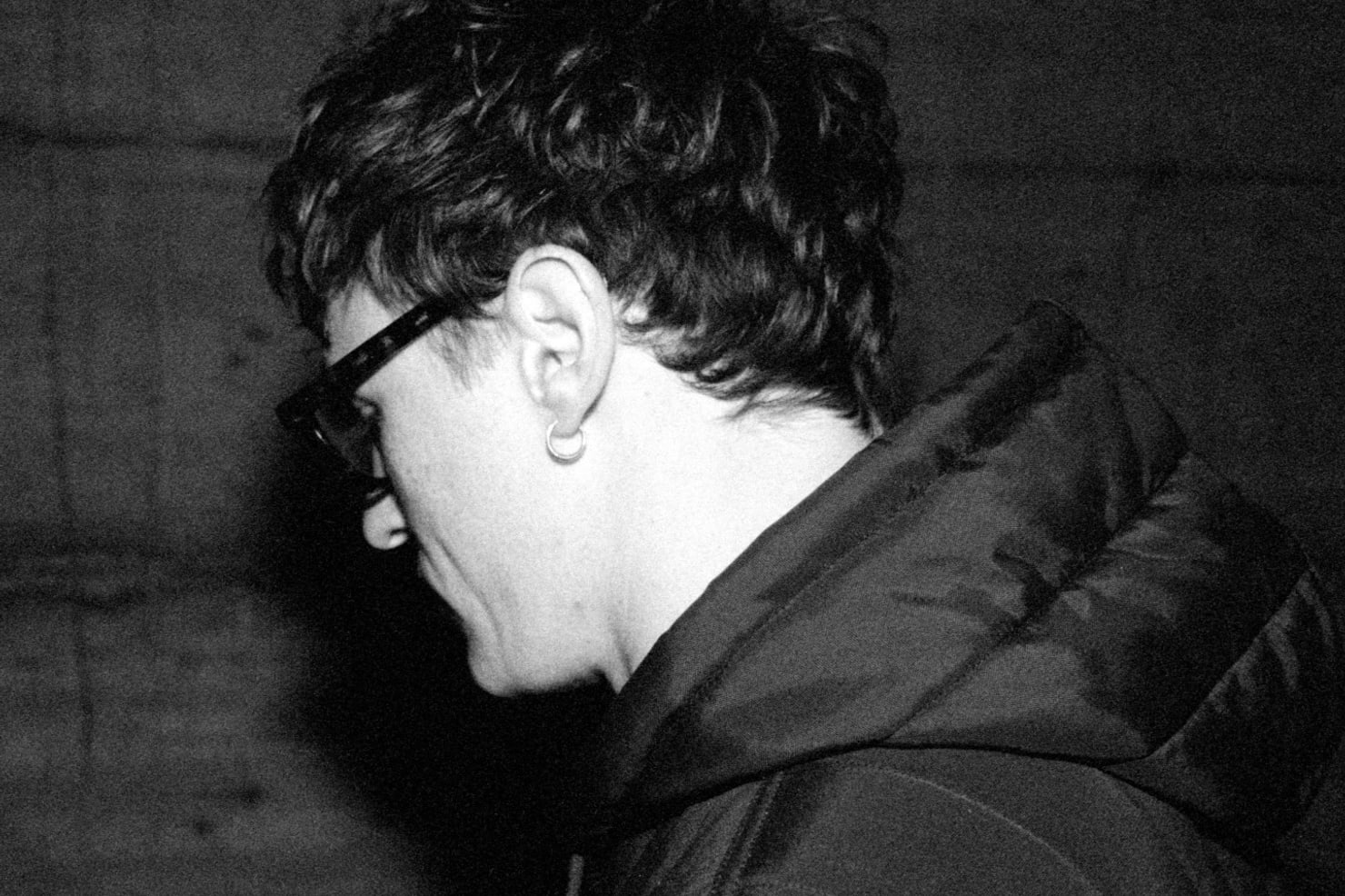
Most of the new UK garage wave is built for the peak of the night. Oscar Farrell makes music for the bit afterwards. His sound is the 4am taxi, the comedown, the emotional release that comes when the lights are still off but the energy has changed, future garage and 2-step shot through with feeling rather than fireworks. It is a rarer thing to do well, and it has made him one of the most quietly exciting names in London electronic music, with a breakout Sampha collaboration, a run of acclaimed EPs and a home on one of the most interesting new labels in the country. This is a working DJ and producer's guide to who Oscar Farrell is, why his emotional take on club music stands out, and what his rise says about who is backing the UK underground now. The facts below were checked against current sources in September 2026.
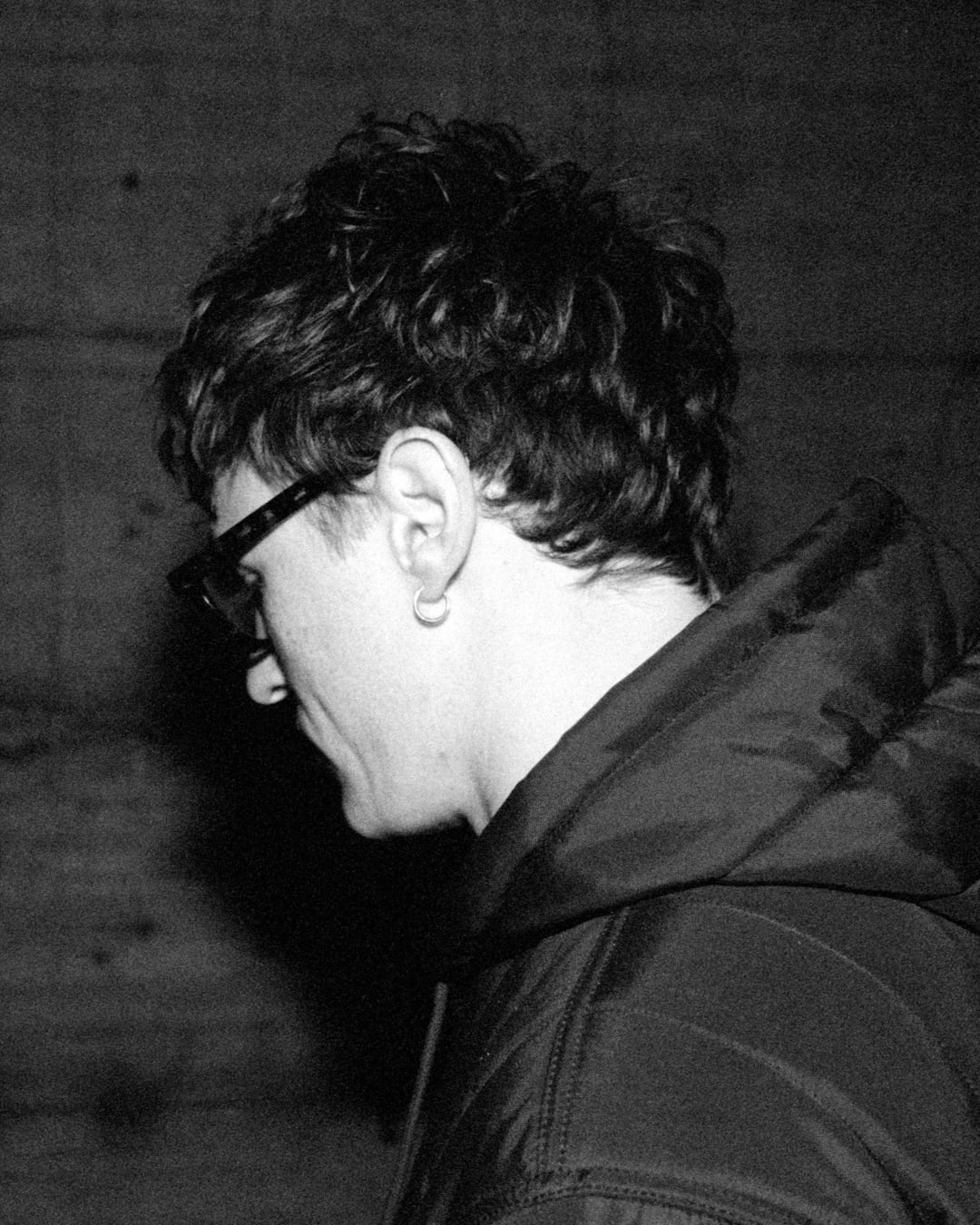
Oscar Farrell at a glance
- Who: a London-based producer and DJ in his mid-twenties (Rinse FM and Strand Magazine described him as 25 in 2025) working in future garage and 2-step.
- Day job in music: the musical director for Sampha's live shows, after two years touring in Sampha's band, a serious musician's grounding.
- Label: dh2, the electronic imprint of Dirty Hit, led by The 1975's George Daniel.
- The EPs: I've Already Called (April 2025), So Far South (September 2025) and Birds Fly In (June 2026).
- The breakout: "Dream Therapy", a collaboration with Sampha.
- Radio: a monthly show on Rinse FM since June 2025; the latest aired on 19 September 2026.
- The sound: emotional, after-hours club music, 2-step rhythms, airy basslines and glitchy, chopped vocals.
- 2026 live: dh2's second birthday at fabric on 9 July and a LIDO Festival booking in Victoria Park on 31 August, on the day curated by Maribou State. Next: an all-night-long back to back with George Daniel at Palais in London on Friday 30 October 2026.
Who is Oscar Farrell?
Behind the music is a genuine musician, which is the key to everything. Oscar Farrell is a London-based producer, but he is also the musical director for Sampha's live band, one of the most respected gigs in British music. That grounding, playing a real instrument in a world-class live setup, shapes the way he makes electronic music. He approaches a club track less like a beat-maker chasing a drop and more like a songwriter and player chasing a feeling, and you can hear it in the harmonic depth and emotional weight of his records.
That is what sets him apart in a crowded field. Where much of the UK garage revival is, gloriously, about energy and bounce, Farrell is interested in the genre's tender, introspective side, the airy, melancholic end of 2-step and future garage that has always existed but rarely gets the spotlight. He makes club music you feel as much as dance to.
The sound: UK garage for the comedown
Across his releases, Farrell explores 2-step rhythms, airy basslines and glitchy, chopped vocal fragments, with an instinctive grasp of club culture's emotional side. It is music rooted equally in dancefloor escapism and the after-hours comedown, the sound of the city after dark rather than the peak-time rush. Where a banger demands you react, a Farrell track invites you to feel something, which makes him the introspective counterweight to the harder, bouncier wing of the UK garage revival.
It is a deliberately difficult balance. Emotional electronic music can easily tip into the inert or the saccharine, but Farrell keeps the rhythms sharp and the production detailed enough that the records still work in a club, just a club at a different hour and a different mood. That is the craft, and it is why DJs and critics have taken him seriously so fast. If you want to hear where that emotional register sits against the rest of the scene's year, our rundown of the year's biggest UK garage records maps the harder-edged territory he deliberately works around.
From jazz school to the dancefloor: how the music gets made
Farrell's route into production explains the sound better than any genre tag. He got his start in the music tech room at school, picking things up from older sixth formers, then played in bands and studied jazz at university, transitioning into electronic music while he was there. In an interview with Strand Magazine he described a process built around playing rather than programming, with jamming treated as the most honest way to get at something real, and named Björk as the artist he returns to constantly for proof of how far emotional electronic music can go.
Talking to Clash around the release of Birds Fly In, he went further into the mechanics. He avoids the standard club-producer habit of starting from a four-bar loop, instead beginning at a piano or guitar and developing a melodic idea before any drums exist, an approach he cheerfully admits runs backwards compared to his peers. The aim, as he puts it, is for the whole sound world to become "a palette of emotion" rather than a verse-chorus exercise. There is humility in the backstory too: he has credited an honest conversation with Lil Silva for convincing him to scrap a large amount of early material and reset, the kind of painful edit almost every artist needs and almost none accepts. Add in his taste for field recordings, including audio captured on a 16mm film camera during the "Dream Therapy" video shoot that ended up folded into the music, and you get a producer treating club tracks the way a composer treats a score.
The Sampha connection and "Dream Therapy"
The relationship that best explains Farrell is his work with Sampha. As Sampha's musical director, he sits inside one of the most emotionally articulate projects in British music, and that influence flows directly into his own work. It came full circle on "Dream Therapy", his breakout collaboration with Sampha, which paired Farrell's detailed, club-rooted production with Sampha's unmistakable voice and became the track that introduced him to a much wider audience.
That a singer as revered as Sampha would step onto a young producer's EP tells you how much respect Farrell commands from serious musicians. It is not a celebrity feature; it is a real creative partnership between two people who already work together every night on stage, and it gives his music a vocal and emotional credibility that few of his peers can match.
The timeline makes the point neatly. Farrell has spent serious road time as part of Sampha's live setup, and at Glastonbury in June 2025 the two went back to back with Lil Silva on a dh2 & Friends bill. "Dream Therapy" arrived as a single that July and passed 230,000 Spotify streams by that October, per Strand Magazine, remarkable traction for a debut-era producer on an independent electronic imprint. He followed it in October 2025 with "Orbits (Scoopic Dub)", a rework named after the camera that supplied its field recordings, which tells you plenty about how intertwined his music and his visual world have become.
dh2: George Daniel and the artist-led label
Here is the wider story Farrell is part of. He is a flagship signing to dh2, the electronic imprint launched by the independent label Dirty Hit in 2024 and led by George Daniel, the drummer and producer of The 1975. dh2 represents something genuinely interesting: a pop-world figure with serious resources using them to back and curate credible underground club music, with a roster including Kelly Lee Owens, and an engine of short-notice club nights in London and New York, from Phonox in Brixton to Public Records.
Farrell has helped shape the label's identity and has collaborated directly with George Daniel on garage-leaning singles like "volc3" and "volc4". It is a model worth watching. For years the worry was that pop success drained talent and attention away from the underground; dh2 flips that, channelling the infrastructure and audience of a major band back into the club world. Farrell is the clearest proof it can produce real, credible artists rather than vanity projects, and it connects to the broader shift towards intimate, short-notice, community-driven club culture.
The Farrell and Daniel partnership started the way the best scene stories do, informally. Farrell has described the two of them ending up back to back behind the decks at a 1975 afterparty, "on my birthday, in this random pub" as he told Clash, getting on instantly, and building the label relationship out of that friendship rather than a boardroom pitch. Two years on, the project has real institutional weight: dh2 celebrated its first birthday at Phonox on 10 July 2025 and marked its second on Thursday 9 July 2026 with a takeover at fabric in London, with Farrell on the bill. On Friday 30 October 2026 he and George Daniel play all night long, back to back, at Palais in London. When a boutique imprint moves from Phonox to fabric in a year, it has stopped being an experiment.
Three EPs in: a fast, confident rise
Farrell has built his catalogue quickly and coherently. His debut EP I've Already Called arrived in April 2025, five tracks of airy 2-step, grounding basslines and chopped vocals that announced a distinctive new voice. So Far South followed in September 2025, a bolder statement headlined by the Sampha collaboration "Dream Therapy" and rounded out by tracks like "Timers", "Orbits" and "I Need U". Then came Birds Fly In in June 2026, a six-track set that gathered his darkest, most propulsive club music yet, from the bass-led "Burning From" with Brooklyn-born, London-based rapper Goya Gumbani, which reworks New York underground rap and soul in a London club context, to the euphoric "Don't Play With Me". Critics noted it sounded heavier and more menacing than his earlier work, a sign he is widening from the after-hours comedown into harder, peak-time club music and spoken-word-laced rap without losing the emotional detail. Three EPs in barely over a year, each a clear step up, is the mark of an artist who knows exactly what they are building.
The reception around Birds Fly In is worth noting for where it places him. Reviewers reached for Burial when describing the title track, all reverb-hung drums and moody atmosphere, which is the comparison every future garage producer both dreams of and dreads. Farrell himself told Clash the EP benefited from more time spent on song structure and songwriting, while also being, in his words, "the clubbiest one" he has made, and that tension is exactly what makes it his best record so far. Introspective music that hits harder, club music that carries more feeling: whichever direction you read it in, the craft has visibly deepened with each release.
Beyond the club: film, visuals and the bigger canvas
One reason I rate Farrell as a long-term prospect is that his ambitions clearly extend past the dancefloor. His releases are built alongside a consistent visual world, developed with collaborators like the photographer and director Samuel Bradley, with whom he has been scoring a film project called LOADS (due in summer 2026 when he spoke to Clash in June), and visual artist Pablo Gallegos. The team shoots on 35mm and Super 8, and Farrell talks fluently about surrealism and brutalist architecture as reference points, which is not the standard press-kit chat of a club producer two years into a career.
He has been open about wanting to move into film scoring properly, drawn to abstract work where melody is not the first obligation, and about a dream collaboration with Björk. None of that is a departure from the club music; it is the same instinct, building emotional atmospheres first and functional tools second, pointed at a bigger screen. Producers with that dual footing, credible in the club and capable beyond it, tend to be the ones still making interesting records a decade later.
A rising live force
The live story has scaled just as fast. Farrell played Glastonbury 2025 alongside the likes of Joy Anonymous, Lil Silva and Sampha, performed at dh2's label nights at venues such as Phonox in London and Public Records in New York, sold out his own EP launch at The Glove That Fits in London with a five-hour set, and was billed at LIDO in London on the day curated by Maribou State. His monthly Rinse FM residency, blending deep cuts, influences and unreleased material, has become a window into his taste and process. For an artist only a year or so into releasing his own music, it is a remarkably established live and broadcast presence, built on the back of genuine musicianship rather than hype alone.
The 2026 run shows the trajectory in miniature: fabric with the label family on 9 July, the LIDO Festival date in Victoria Park on Monday 31 August 2026, the bank holiday closer of the season, and an all-night-long b2b with George Daniel at Palais in London on Friday 30 October. That LIDO booking was the one to circle. Maribou State curating him onto their own day is a statement about how his music is being categorised now, not as a garage revival act but as part of the longer lineage of soulful electronic music.
Essential Oscar Farrell tracks
To get him quickly, start with "Dream Therapy", the Sampha collaboration that is both his breakout and the clearest distillation of his emotional, vocal-led approach. The title track "So Far South" showcases his signature airy 2-step, "Burning From" with Goya Gumbani shows the bass-led, hip-hop-touched side, and his collaborations with George Daniel, "volc3" and "volc4", reveal the more club-functional, garage-driven end of his range. Across them you hear a producer making dance music with a musician's heart. From there, go to the title track of Birds Fly In for the darkest, most atmospheric cut in the catalogue, "Don't Play With Me" for the euphoric peak, and "Orbits (Scoopic Dub)" for the deconstructed, film-camera-textured side of his world.
Why Oscar Farrell matters
Oscar Farrell matters because he expands what the UK garage revival can be. While much of the scene chases energy and bounce, he has staked out its emotional, after-hours territory, making club music that rewards feeling as much as dancing, informed by his life as a working musician at the highest level. He is also at the centre of one of the most promising new structures in British music, George Daniel's dh2, where pop-world resources are being used to lift up the underground rather than strip-mine it. As both an artist and a sign of where the scene's support is coming from, Oscar Farrell is one of the most quietly important names to watch.
FAQ
Who is Oscar Farrell?
A mid-twenties London-based producer and DJ working in future garage and 2-step. He is also the musical director for Sampha's live shows, and is signed to the dh2 label.
What label is Oscar Farrell on?
dh2, the electronic imprint of Dirty Hit, led by The 1975's George Daniel. Farrell is one of its flagship artists, alongside Kelly Lee Owens.
What kind of music does Oscar Farrell make?
Emotional, after-hours UK club music, future garage and 2-step built on airy basslines, intricate rhythms and glitchy, chopped vocals. It leans towards feeling and the comedown rather than peak-time bangers.
What are Oscar Farrell's EPs?
I've Already Called (April 2025), So Far South (September 2025, featuring the Sampha collaboration "Dream Therapy") and Birds Fly In (June 2026).
How is Oscar Farrell connected to Sampha?
He is Sampha's musical director, the two collaborated on Farrell's breakout track "Dream Therapy", and they went back to back with Lil Silva at Glastonbury in June 2025.
What are Oscar Farrell's best tracks?
"Dream Therapy" with Sampha, the title track "So Far South", "Burning From" with Goya Gumbani, and his collaborations with George Daniel, "volc3" and "volc4".
Where can I see Oscar Farrell live in 2026?
His next listed date is Friday 30 October 2026 at Palais in London, an all-night-long back to back with George Daniel, per the tour listing on his official site. Earlier in 2026 he played dh2's second birthday at fabric on 9 July and was billed at LIDO Festival in Victoria Park on 31 August, on the day curated by Maribou State. He also hosts a monthly show on Rinse FM.
Sources
- Bandcamp, Dirty Hit and The Line of Best Fit on Oscar Farrell's EPs I've Already Called, So Far South and Birds Fly In
- i-D, The Face and Dork on dh2, George Daniel and the label's roster and club nights; NME on the "volc3" and "volc4" collaborations
- Crack Magazine, Strand and whynow features on his sound, his role as Sampha's musical director and "Dream Therapy"; Clash's 2026 feature on Birds Fly In, his writing process, the George Daniel afterparty story and the LOADS film project
- Rinse FM show page (bio, monthly episodes from June 2025, dh2 first birthday at Phonox on 10 July 2025); Glastonbury Festival 2025 line-up (Joy (Anonymous) x Oscar Farrell; Oscar Farrell b2b Sampha b2b Lil Silva; Lil Silva b2b Oscar Farrell); oscarfarrell.com tour listing (Palais, 30 October 2026); Clash (5 June 2026) on fabric on 9 July; LIDO on 31 August 2026 curated by Maribou State; Stereofox, Dork and Clash on the Birds Fly In EP and its reception
This guide is part of House of MNEEMO's ongoing coverage of the electronic and club music scene, written by London-based DJ and producer MNEEMO, with millions of streams to his name and a party series running through some of London's best clubs.