Boiler Room 2026: How to Actually Get Tickets
How to get Boiler Room tickets: free membership, per-show pre-register, DICE at the drop, then the wait list. Next: Tokyo, Osaka, Warsaw, Chicago.
To get Boiler Room tickets, sign up for the free Boiler Room membership and the pre-register link for the show you want, be in the ticket app at the drop time (DICE for most dates, local sellers such as Ticket Pia in Tokyo and Poolen in Copenhagen), and join the wait list the moment it sells out. There is no London date on Boiler Room's calendar as of late September 2026. The next shows are Rotterdam on 26 September, Los Angeles on 26 and 27 September, Tokyo on 17 and 18 October, Osaka on 24 October (sold by raffle), Warsaw on 7 November, Tbilisi and Amsterdam (already sold out) on 14 November, Copenhagen on 11 December (sold out) and Chicago on 18 December, whose pre-sale opens on Thursday 1 October at 11am.
Boiler Room built its entire myth on being the party you could not get into. For years it was the sweaty room behind the camera, the crowd you watched on a stream wishing you were there. In 2026 that scarcity has become a system: tickets vanish in under a minute, the door is governed by an app, and getting in rewards the prepared: members hear first, the quick get through, and everyone else watches the stream. The good news is that the process is learnable. This is a working DJ and producer's guide to how Boiler Room ticketing works in 2026, how to maximise your chances, what is coming up, and why the whole thing says something about modern club culture. Details were checked against current sources in July 2026 and updated in late September 2026; always confirm on the official channels, because this is exactly the kind of event scammers target.
Boiler Room 2026 tickets at a glance
- Where to buy: the DICE app for most shows, Boiler Room's main ticketing platform; some cities use local sellers (Ticket Pia for Tokyo, Poolen for Copenhagen), linked from each show page on boilerroom.tv.
- Step one: create a free Boiler Room membership, then find the per-show pre-register or sign-up link, which opens before the general sale.
- The edge: membership presales, DICE notifications and the returns-based waiting list on sold-out shows, where returned tickets really do get re-released.
- The reality: tickets sell out astonishingly fast, sometimes in under a minute.
- Stay informed: follow official Boiler Room channels, and be aware the community trades drop news on Telegram and WhatsApp.
- Next 2026 events: Rotterdam 26 September (final tickets); Los Angeles 26 and 27 September (Sunday on the wait list); Tokyo 17 October, plus 18 October added after the first day sold out; Osaka 24 October (raffle); Warsaw 7 November (final tickets); Tbilisi 14 November; Amsterdam 14 November (sold out, sign-up for returns); Copenhagen 11 December (sold out, sign-up for releases); Chicago 18 December (pre-sale Thursday 1 October, 11am).
- London: no date listed as of late September 2026. The Burgess Park weekender ran on 31 July and 1 August, and a Beeyou Records session followed on 6 September.
- At the door: DICE's Boiler Room guidance is blunt: no physical ID, no entry. Check the age limit on each listing.
Do you need a ticket to get into a Boiler Room?
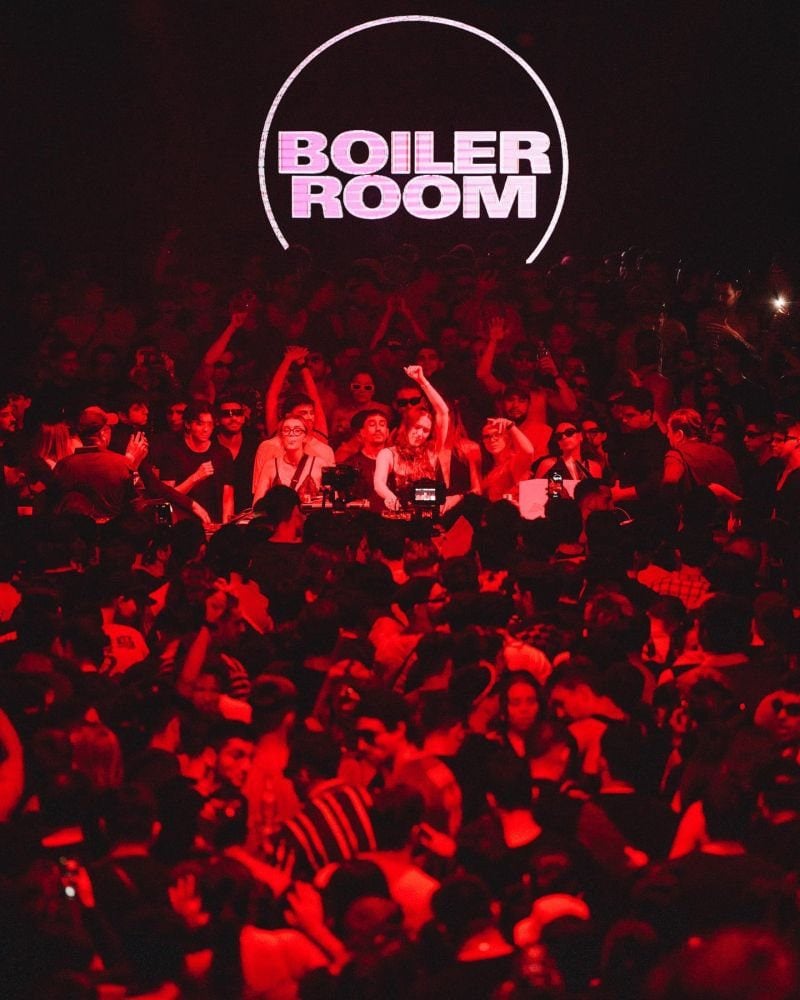
Boiler Room has been broadcasting underground club culture to the world since 2010, and by its own count has been a stage for more than 9,000 artists across more than 300 locations. The format is famous: a tightly packed room, a DJ, and a live stream, with the crowd dancing around and behind the booth in full view of the camera. It turned the act of watching a club night into global content, and a slot has become a genuine career-maker, as we explored in our history of Boiler Room. Owned by the ticketing platform DICE from 2021, then acquired by the events company Superstruct in January 2025, with DICE staying on as its primary ticketing partner, it runs events, broadcast and film, but the live shows remain the crown jewels, and the hardest tickets in dance music to get.
How Boiler Room ticketing actually works in 2026
The gatekeeper is usually the DICE app. Boiler Room shifted years ago to app-based, mobile-only ticketing, and DICE is where most drops happen; a few international dates sell through local platforms instead, and the Tickets button on each boilerroom.tv show page tells you which. The first practical step is to sign up for a free Boiler Room membership, which unlocks invitations to events in your city, presale and early-bird access, and alerts about new shows. Membership is the difference between hearing about a drop in time and missing it entirely.
Two mechanisms matter more than most people realise. The first is the DICE waiting list: when a show sells out, joining the waiting list is not a formality, because DICE tickets cannot be resold outside the app, returns go back into the pool, and DICE re-releases them to the queue until the wait list deadline shown on the ticket. The second is the per-event signup on sold-out session pages, where Boiler Room invites fans to be first to know if more tickets are added. Between membership presales, the waiting list and those signups, plenty of people get in long after the headline sell-out.
Why tickets vanish in seconds
Make no mistake about the demand. Boiler Room rooms are deliberately small, often a few hundred capacity, while the audience is global, so the maths is brutal. When Boiler Room Montreal went on sale in October 2025, a reported 14,000 people refreshed their apps at once and the tickets were gone in about 47 seconds, according to Best Kept Montreal. That is not a glitch; it is the model. The scarcity is the point, the same engineered exclusivity that makes the brand desirable in the first place. Going in expecting a relaxed checkout will end in disappointment. You have to treat a Boiler Room drop like a flash sale you have prepared for.
How to maximise your chances
Here is the practical playbook. First, download DICE and create your Boiler Room membership well in advance, with notifications switched on. Second, if a show is already sold out, join the DICE waiting list immediately and hit the signup on the session page; returned tickets are re-released to the queue until the wait list deadline. Third, know the exact drop time and be in the app, logged in, with payment details saved, a minute before it opens. Fourth, follow Boiler Room's official social channels and city pages for announcements, because some shows are revealed at very short notice. Finally, and this matters, never buy from resale sites or strangers in Telegram groups: Boiler Room tickets live in the app and can only be passed on through the wait list or an in-app transfer, resale is rife with scams, and a screenshot is worthless. If you miss out, wait for the stream and the next drop rather than risk it.
The release ladder, step by step
Boiler Room does not put a show on sale once. It releases it in waves, and people who think they missed their shot usually missed one rung of a ladder that had four.
Pre-register is the rung that matters. Each show runs its own sign-up that opens before the general sale, not alongside it. Complex Maastricht, which hosted the 4 September date, said its pre-register sale opened two hours before the regular sale, and warned that every ticket for the previous edition went inside the first hour of that window. Find the per-show link; a general membership does not cover it.
Then the priced tiers. Prices climb rather than sitting still: Maastricht published early bird at €32, regular at €34, late at €36. When you see an early bird, take it.
Then the final release, which almost nobody works. Boiler Room holds stock back and releases it close to the date. Nottingham's Colwick Park date did it in June, the London Saturday page announced final release tickets days before 1 August, long after the city had filed the weekender under sold out, and Rotterdam and Warsaw both put final tickets on sale in September.
Finally, added dates. When a room overruns, Boiler Room adds a day rather than a bigger venue. Maastricht's Friday sold out and a Saturday on 5 September was added, the Los Angeles Saturday on 26 September was added as a second date alongside the Sunday, and the July New York Saturday was billed on Boiler Room's listings as newly added. An added date is the least competitive ticket the brand sells.
Is there a Boiler Room ballot?
Not for UK shows: there is no registration number and no draw date. The exception is Japan, where raffles are normal: Boiler Room's Osaka date on 24 October 2026 sells through a ticket raffle that opened on 25 August. What UK fans usually mean by a ballot is the RSVP list used for the free broadcast sessions. Sheffield's 2 May session at Electric Studios was free entry with RSVP essential. Treat a confirmed RSVP as a place in a queue rather than a guarantee: at Rossi.'s London debut we counted around 300 confirmed people who never got inside. Arrive early. The small London sessions, like that one, are where the format is at its most intimate.
Working the wait list properly
DICE documents its wait list precisely enough to play it properly. Returned tickets go out in the order people joined, weighted by how many each person asked for, and DICE states that you are more likely to be offered tickets if you want only one or two. When your turn comes you get a notification and a reservation window that DICE describes as twenty minutes to two hours.
The returns tend to come in two waves. One can land within a day of the on-sale, because DICE lets promoters switch on a cooling-off refund, usually within twenty-four hours of purchase. The other builds towards the date, as plans change and the wait list becomes the way to get money back; DICE itself says the odds of being offered a ticket rise as the event gets closer. Leave your place running until the deadline. One cut-off: the wait list and transfer deadlines usually fall a few hours before the event, and the exact time is shown on the ticket.
What actually improves your odds beyond luck
Speed is the part everyone obsesses over and the part you control least. Three things move the needle.
Layer your lists, and split the group. Membership is the base; subscribe to the individual city pages, which carry their own sign-up boxes, then find the per-show pre-register link. And send four people after one ticket each rather than one person after four: you are drawing four independent tickets, not one block.
Pick the day nobody is fighting over. On a weekender the house and techno day goes first, because that audience treats a Boiler Room as a pilgrimage rather than a night out. At Burgess Park the Friday, with Basement Jaxx live and Chris Stussy (now Chris Stassy), sold out at £50 while the Saturday was still selling from £35 at the end of July. In Los Angeles the Sunday, built on Teletech's long-awaited LA debut, went to the wait list while the Saturday was still on sale in late September.
If you need access support, ask rather than buy. Boiler Room's accessibility page says personal assistant tickets are supplied free on request and should not be bought as a paid extra. DICE asks for companion requests at least two weeks ahead.
The resale and scam landscape in 2026
Start with what the ticket physically is, because it ends the argument. For a DICE-sold show it is a QR code generated inside the DICE app, tied to your account and phone number, and it does not exist until you activate it on the day, usually a couple of hours before the start. Screenshots are not accepted and there is no printable version. When somebody offers to send you a Boiler Room ticket, there is nothing for them to send.
Two legitimate routes exist for a ticket somebody cannot use: return it to the wait list, or, where enabled, transfer it in the app to a friend's DICE account. Anything else will not scan.
NatWest reported on 10 June 2026 an 89 per cent rise in the value lost to ticket scams between 2023 and 2025, and that 18 to 25 year olds make up 37 per cent of victims of music ticket fraud. The Home Office counted more than £1.6 million lost to gig ticket fraud in 2024 across roughly 3,700 Action Fraud reports, almost half of them about offers made on social media, and its advice is the whole defence: never move away from an official payment platform to pay by bank transfer or virtual currency.
Refuse, specifically: PDFs, photos and forwarded confirmation emails; spares for shows that have not gone on sale yet; anyone wanting payment first with an in-app transfer promised afterwards, because a bank transfer carries none of a card's protections; accounts appearing under an announcement post within minutes offering pairs; and resale sites listing Boiler Room dates at multiples of face value, because a listing is not a ticket.
What to expect on the night
Get the admin right. Age limits vary by city (the 2026 London weekender was 18+), so check the limit in the app for the show you want. Physical photographic identification is required, and DICE's Boiler Room guidance leaves no room for interpretation. Download the ticket before you travel: a field with thousands of phones on it is not where you want to find your data has given up.
Then adjust what you think this is. The 2026 London weekender was a daytime open-air festival, not a club night. Doors were 14:00 on the Friday and 12:00 on the Saturday, and both days finished at 22:30. The sets you care about happened in daylight and the curfew was fixed, so the stage you committed to early in the afternoon decided your day. Club shows such as Warsaw (22:00 to 08:00) run the other way.
Burgess Park itself, per the event's own access notes, had grassy ground that can get muddy, concrete paths from the drop-off point to the main entrance, all stages accessible, and no onsite parking. Boiler Room's accessibility page adds that events may use strobe lighting, and aims to answer access enquiries within three working days.
Then the camera. The format is in the round, and the Open Dance Floor Policy is direct: most events are recorded for later streaming, you should be conscious of it, and, in Boiler Room's words, "You are responsible for how you appear on camera." It asks you to give artists ample space, and points you to a trained welfare team, or info@boilerroom.tv afterwards.
The unromantic advice on where to stand: the front of a Boiler Room crowd is a camera position, not a listening position. In the lens you get crowd noise and monitor spill. Off to the side of the booth, within reach of the stacks, is where the mix is balanced and the low end makes sense.
Upcoming Boiler Room 2026 events
Boiler Room keeps a rolling calendar, and as of late September 2026 the upcoming list runs: Rotterdam on 26 September (final tickets, last entry 9pm); Los Angeles on 26 and 27 September, with Teletech's LA debut on the Sunday, which is on the wait list; Tokyo at GARDEN Shinkiba FACTORY on 17 October with Shinichi Osawa, plus an 18 October date added after the first sold out; Osaka on 24 October by raffle; Warsaw on 7 November, a 10-hour hard house show with final tickets on sale; Tbilisi on 14 November with 999999999, Natte Visstick and Laure Croft; Amsterdam on 14 November, sold out; Copenhagen on 11 December, sold out; and Chicago on 18 December, with pre-sale from Thursday 1 October at 11am. No London date is listed.
London's 2026 headline event was the four-stage open-air weekender at Burgess Park: Friday 31 July, with Basement Jaxx's full live band making their Boiler Room debut and a rare Chris Stussy London festival set, sold out, while final-release tickets for Saturday 1 August, where Face 2 Face and Teletech hosted their own stages, sold via DICE from £35. A London session with Beeyou Records followed on 6 September. New York's shows at Under the K Bridge Park took place on 10 and 11 July, and Maastricht (4 and 5 September) and Washington DC (12 September) followed, alongside the one-offs the brand runs all year. Cities rotate constantly, from London and New York to Los Angeles, Montreal and beyond, so the key is to watch your own city's Boiler Room page and the app for what lands near you.
The regional and international shows that are easier to get into
The Burgess Park weekender was the hardest ticket Boiler Room sold all year, and the least representative of what the brand does. The rest of the calendar is easier, cheaper and often better.
Per Boiler Room's DICE listings and its own session pages, the club shows are where the value sits. Maastricht on 4 and 5 September ran 22:00 to 05:00, a proper all-night club show rather than an afternoon in a park, with a ladder topping out at €36 against London's £50 Friday, and a second night added once the Friday sold out. As of late September 2026, Warsaw (7 November, 22:00 to 08:00) still has final tickets, Tbilisi (14 November, 22:00 to 16:00 the next day) is on sale, and the Los Angeles Saturday on 26 September, the second date added to that weekend, is the LA ticket still open.
Beneath them sits the layer where the door is softest and the format is at its best: the free, RSVP-only city sessions. Sheffield returned on 2 May at Electric Studios for garage and bassline. Durban hosted an all-star gqom session on 12 June, Soweto Punk followed on 15 June, Limpopo's mapanta session on 20 June documented a Bapedi-rooted DIY sound system culture from Ga-Sekhukhune, and Nottingham got its Colwick Park debut on 26 June, curated by Overmono.
A free garage and bassline night at Electric Studios is closer to what Boiler Room was built to do than a four-stage park in Southwark, and it costs nothing. If you live outside London, subscribe to your own city page on the Boiler Room city index, because these land at short notice and the RSVP list is the only way in. It is the argument we keep making about small rooms against festivals, except here it is also the easier ticket.
The bigger picture: when being a real fan is the door policy
Step back and the 2026 ticketing model is a neat piece of cultural commentary in itself. Boiler Room was born from the underground tradition of the in-crowd, the party you had to know someone to attend. As it scaled into a global brand, it needed a way to recreate that exclusivity at scale, and the answer turned out to be process: be a member, hear first, move fast, and hold your place in the queue when you miss. In a sense it is the fairest version of a guest list ever built, rewarding attention and commitment over connections or cash, the same presence-and-authenticity values driving the wider shift in club culture. In another sense it is exclusivity formalised into an algorithm. Either way, the lesson for 2026 is simple: the best way to get into Boiler Room is to be exactly who it is for, a real fan, prepared and quick.
One more thing worth knowing in 2026: Boiler Room is not without controversy. Its owner, Superstruct, is owned by the investment firm KKR, and those ties have prompted boycott calls and artist withdrawals, as Mixmag and DJ Mag have reported, while Resident Advisor has reported substantial staff layoffs at Boiler Room. None of that changes how the tickets work, but it is part of the fuller picture of the brand right now.
FAQ
How do you get Boiler Room tickets in 2026?
Mainly through the DICE app, though a few cities use local sellers such as Ticket Pia in Tokyo and Poolen in Copenhagen. Create a free Boiler Room membership, sign up to the pre-register link for the show you want, turn on notifications, and be ready in the app at the exact drop time. If a show sells out, join the DICE waiting list, because returned tickets are re-released to the queue.
Why do Boiler Room tickets sell out so fast?
Because the rooms are small and the audience is global. One Boiler Room Montreal sale reportedly saw 14,000 people refreshing at once, with tickets gone in around 47 seconds. The scarcity is part of the brand's appeal.
Is there a Boiler Room ballot or membership?
Boiler Room offers a free membership that provides presale and early-bird access, event invitations and alerts. UK shows have no ballot: access runs on the free membership, per-show pre-registers, on-sales and a returns-based waiting list. Some Japanese dates use a raffle, as Osaka does for 24 October 2026.
Can I buy Boiler Room tickets on resale sites?
It is strongly discouraged. Tickets are app-based and can only be passed on through the wait list or an in-app transfer, and resale listings are frequently scams. Buy only through DICE, the seller linked from the Boiler Room show page, and official Boiler Room channels.
What Boiler Room events are happening in 2026?
As of late September 2026: Rotterdam and Los Angeles on 26 September, Los Angeles again on 27 September, Tokyo on 17 and 18 October, Osaka on 24 October, Warsaw on 7 November, Tbilisi and Amsterdam on 14 November, Copenhagen on 11 December and Chicago on 18 December. No London date is listed; the Burgess Park weekender ran on 31 July and 1 August.
What is Boiler Room?
A platform broadcasting underground club culture since 2010, which by its own count has hosted more than 9,000 artists across more than 300 locations. It runs intimate, camera-facing live shows that have become career-defining slots for DJs.
How does the Boiler Room presale work?
Each show runs its own pre-register sign-up that opens before the general sale, so membership alone is not enough. For the 4 September 2026 Maastricht date the host venue said pre-register opened two hours early, and that the previous edition sold out inside the first hour.
How does the DICE wait list work?
Returned tickets are offered in the order people joined, weighted by how many each person requested, and DICE says asking for one or two improves your chances. You then get a reservation window of twenty minutes to two hours. DICE also says the odds of being offered a ticket rise as the event gets closer.
What ID do I need, and what is the age limit?
Physical photographic ID is required: no ID, no entry. Age limits vary by city (the 2026 London weekender was 18+), so check the limit in the app for the show you want.
Sources
- Boiler Room official site, upcoming-shows and city pages for the 2026 calendar and membership details; checked again on 25 September 2026 for the Rotterdam, Los Angeles, Tokyo, Osaka, Warsaw, Tbilisi, Amsterdam, Copenhagen and Chicago show pages, the Maastricht Saturday and the London Beeyou Records session, and the About page (9,000+ artists, 300+ locations, DICE 2021, Superstruct January 2025)
- DICE's official Boiler Room FAQ on the app, ID, in-app transfer and the returns-based waiting list; DICE help centre articles on the wait list queue, the 20-minute to two-hour reservation window, cooling-off refunds and ticket activation; Best Kept Montreal (3 April 2026) on the Montreal sell-out
- Resident Advisor news: "Boiler Room to undergo substantial layoffs"
- Boiler Room session pages and DICE listings for the Burgess Park weekender (31 July sold out; 1 August final release), Basement Jaxx and Chris Stussy on the Friday, Face 2 Face and Teletech stages on the Saturday; Music Business Worldwide and Pollstar on the DICE (2021) and Superstruct (January 2025) acquisitions; Mixmag and DJ Mag on the KKR-linked boycotts and layoffs
- Coverage of Boiler Room's history, scale and Superstruct ownership
- Official channels for confirmed 2026 London, New York and one-off event dates
- Checked 30 July 2026: Boiler Room session pages for Maastricht, Washington DC, Los Angeles, London, Nottingham, Sheffield, Durban, Soweto and Limpopo, plus the Open Dance Floor Policy and accessibility page; DICE listings and wait list documentation; Complex Maastricht on pre-register timings and tiers; fraud figures from NatWest and the Home Office
This guide is part of House of MNEEMO's ongoing coverage of the electronic and club music scene, written by London-based DJ and producer MNEEMO, with millions of streams to his name and a party series running through some of London's best clubs.