The Best Techno Clubs in Europe in 2026
Berghain, Tresor, Bassiani, Fabrik, Fuse: the techno clubs actually open across Europe in 2026, what each sounds like, and how to get in.
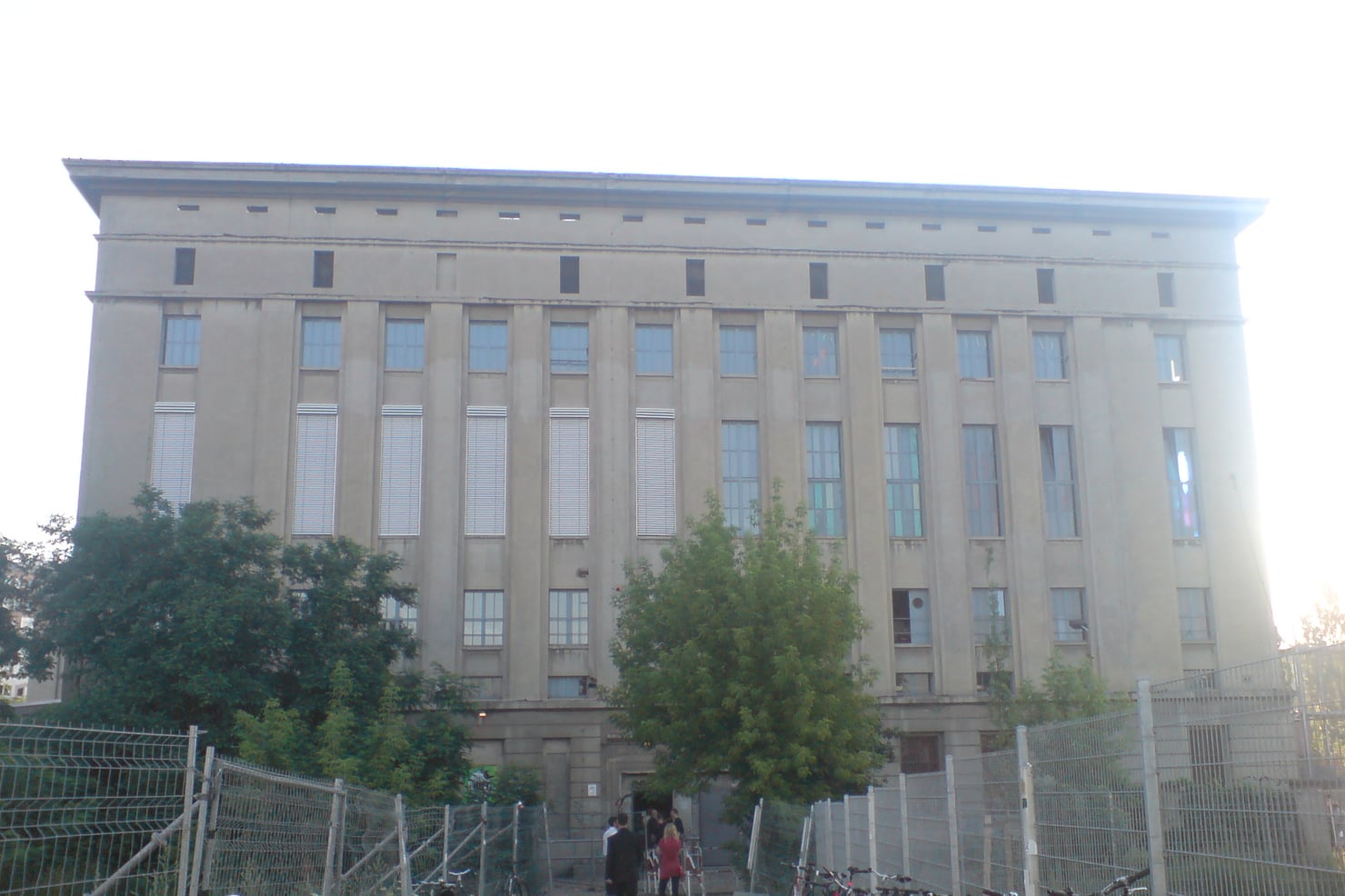
The best techno clubs in Europe in 2026 are Berghain and Tresor in Berlin, Bassiani and Khidi in Tbilisi, Fabrik in Madrid, Fuse in Brussels, Nitsa in Barcelona and Shelter in Amsterdam. There is no single winner, only the right room for the trip you are taking. Most guides to this subject are recycled listicles written by people who have never queued in the cold at 4am, and half of them still list venues that have closed. This one is written from behind the decks. It tells you which clubs are actually open in 2026, what each one really sounds like, and how to get through the door without wasting a flight. Facts were rechecked against current sources on 26 September 2026, and a scene this alive keeps moving, so confirm before you travel.
The best techno clubs in Europe in 2026 at a glance
- The reference point: Berghain, Berlin, in a former Heizkraftwerk power plant, still running its marathon weekend Klubnacht.
- The 35-year-old vault: Tresor, Berlin, founded 1991, with "T35", the Tresor Records 35th anniversary weekend, on 2 and 3 October 2026.
- The most political dancefloor on earth: Bassiani, Tbilisi, built inside a drained Soviet swimming pool under a football stadium.
- The industrial one: Khidi, Tbilisi, raw concrete beneath a bridge over the Mtkvari, programming club nights into October 2026.
- The superclub: Fabrik, Madrid, seven rooms, 6,000 capacity on DJ Mag's listing, and the highest-placed club in mainland Spain in DJ Mag's 2026 poll at number 8.
- The survivor: Fuse, Brussels, open since 1994, back after a 2023 noise shutdown, with a "24HRS of Fuse" on 17 October 2026.
- The theatre: Nitsa, Barcelona, techno and house in its 32nd year inside the landmark concert hall Sala Apolo.
- The low-ceiling purist room: Shelter, Amsterdam, two Funktion-One rooms under the A'DAM Tower, no phones.
- The poll story: Berghain slipped to number 21 in DJ Mag's Top 100 Clubs 2026, while Ibiza's [UNVRS] debuted at number 1.
- The ghost: De School in Amsterdam is not reopening, so do not plan a night around it.
How we picked these clubs
Three rules, and only three. First, the club has to be open and programming in 2026, verified against its own listings rather than a tourism blog, a test that knocks out most of the competition. Second, sound over hype. We care what a floor does at 3am, not how it photographs. Third, honesty about the wobble. Where a venue is threatened, or has fought to stay open, or sits in a country where the door could be kicked in by armed police, we say so plainly, because that context is the story with techno in 2026.
One number recurs below and deserves a health warning. DJ Mag's Top 100 Clubs is a public fan-vote poll, not a critical ranking, so it measures how well a club mobilises its followers to click, not how good the room is. In the 2026 edition Fabrik placed at 8 and Berghain at 21, and Berghain slipping five places while a brand-new Ibiza hyperclub took the top spot tells you more about voting blocs than about dancefloors. We quote the numbers where they are interesting and ignore them where they are not.
Berlin: Berghain and Tresor, the two poles of the city
Berlin is still the gravitational centre, and it does the job with two clubs that could not be less alike. Berghain is the one everyone has heard of, housed in a monolithic former Heizkraftwerk on Am Wriezener Bahnhof in Friedrichshain, and it remains the reference point against which the rest of Europe is measured. It opened in 2004, Panorama Bar that October and the main floor that December, the founders Norbert Thormann and Michael Teufele having previously run the club Ostgut, which operated in Friedrichshain from 1998 until 2003. The name is a portmanteau of the two districts it sits between, Kreuzberg and Friedrichshain, and the building is really several venues at once: the cavernous main floor, the house-leaning Panorama Bar upstairs, the smaller Säule, plus Halle am Berghain, the Kantine and, in summer, the Garten. DJ Mag lists its capacity at 1,500. The Klubnacht still runs across the whole weekend in 2026, and endurance is the point. This is a room built for the long haul, not the two-hour visit.
In its 2026 poll write-up DJ Mag called Berghain "aloof, allusive, and culturally significant all at once", citing its "globally renowned sound system and strict door policy", which is a fair summary of both the appeal and the obstacle. The door is genuinely unpredictable and entry is never guaranteed, and inside there is a firm no-photos policy, with phone cameras covered by stickers on the way in. If that sounds forbidding, it is meant to. The compensation is a floor that takes its music, and your presence on it, entirely seriously.
A short walk into Mitte sits the other pole. Tresor was founded in March 1991 and reaches its 35th anniversary in 2026, marked by "T35: Tresor Records 35th Anniversary" across the Tresor floor and the Globus room on Friday 2 and Saturday 3 October. It relocated in 2007 to the decommissioned Heizkraftwerk Berlin-Mitte on Köpenicker Straße, and that basement, low and hard and stripped back, is the closest thing techno has to a cathedral crypt. Where Berghain pairs a brutal main room with the warmer Panorama Bar, Tresor is the raw, minimal, Detroit-lineage vault with far less interest in comfort. It runs Klubnacht on Saturdays and "Tresor New Faces" on Wednesdays, and the anniversary season is the reason to make Tresor, not Berghain, the club you plan the trip around this year. If you want the through-line from these rooms back to the records that built them, our piece on minimal deep tech and the 90s house revival traces the same lineage.
Tbilisi: Bassiani and Khidi, the world's most political dancefloor
If Berlin is the centre, Tbilisi is the conscience. Bassiani is the Georgian capital's flagship techno club, and its setting alone would earn a place here: it is built inside a drained Soviet-era swimming pool beneath the Dinamo Arena football stadium, a space that turns the low frequencies into something physical. Its harder sibling, Khidi, sits in raw concrete beneath the Vakhushti Bagrationi bridge over the Mtkvari river and leans industrial, and its own calendar runs club nights into October 2026. Check Bassiani's channels for current dates before you travel.
Why Tbilisi's clubs became protest symbols
You cannot write honestly about these rooms without the politics, because in Tbilisi the dancefloor and the street are the same fight. On 12 May 2018, armed police raided Bassiani and the club Café Gallery, and Bassiani's two owners were among those arrested. The raids triggered protests in front of the Georgian parliament that media outlets called the "Raveolution", and on 13 May the then interior minister, Giorgi Gakharia, came out to the protesters and apologised for alleged police misconduct. It was the moment the world understood that a Georgian techno club was not just a nightclub.
The pressure returned in spring 2024. Georgia's ruling Georgian Dream party passed a "foreign agents" law, the bill clearing its third reading in parliament on 14 May 2024 by 84 votes to 30, and Tbilisi filled with mass pro-EU protests against it, in a city whose club scene already knew what protest looked like. The situation in Georgia can change quickly, so check the current status before booking, but as of this writing the clubs are programming. When people talk about clubbing as resistance, this is what they actually mean. If you want to understand how the global underground documents nights like these, our history of Boiler Room's global underground archive is a good companion, given how much of that footage has come from rooms exactly like these.
Madrid: Fabrik, the superclub built for scale
Not every great techno night wants a drained swimming pool and a moral dimension. Sometimes you want scale, and for that the answer is Fabrik, a superclub opened in 2003 in Humanes, in the industrial belt southwest of Madrid, with seven indoor and outdoor rooms including the Main Room, Satellite, Glass, Area 19, Hangar, Terrace and Club Zone, and a capacity DJ Mag lists at 6,000. DJ Mag's 2026 poll placed it at number 8, up six places and back in the top 10 for the first time since 2013, making it the highest-placed club in mainland Spain and one of the highest-placed techno-oriented rooms in the entire list. Whatever you make of the poll, that is a genuine signal of reach.
Fabrik's flagship techno brand, CODE, is where the room shows what it can do at full stretch, and its CODE Summer Festival is one of two summer festivals on the site with seven stages each. This is techno as a day-into-night event rather than an intimate room, and it is one of the more accessible entries on this map: an easy city to reach, a clear programme announced in advance, and a door that is not built to intimidate. If your idea of a good night is a colossal system, a huge crowd and a headliner you already love, Fabrik does it best. Those chasing the same energy in the Balearics should read how Ibiza's hyperclubs compare, since [UNVRS], the club that topped the 2026 poll, is the current high-water mark for that kind of spectacle.
Brussels: Fuse, thirty years and the fight to stay open
Brussels gives us the survivor. Fuse opened in 1994 on a site that had housed cinemas, and it is still at Rue Blaes 208 in the Marollen district, with a capacity of about 1,500. Its owners, Thierry Coppens and Peter Decuypere, built it into one of Europe's best-known techno clubs, and over three decades acts from Daft Punk to Aphex Twin and Björk have played there. More than 30 years of that is a serious institution.
It nearly did not survive. On 12 January 2023 Fuse shut its doors after Brussels Environment ordered it to cut its sound to 95dB and close at 2am, following a complaint from a neighbour. The club appealed, won, and reopened without those restrictions, one of the clearest recent examples of a club fighting a single complaint and surviving. Crucially, Fuse is open and programming well into late 2026: it ran the XRDS Festival on 15 August, and its autumn calendar runs to a "24HRS of Fuse" on 17 October and Silva Bumpa on 31 October. Like Berghain, it applies camera stickers at the door, and filming gets you ejected. Anyone telling you Fuse has a fixed closing date is guessing. The Fuse story is the international version of an argument we make closer to home about why clubs keep closing, and what it takes to stop them.
Barcelona: Nitsa, techno inside Sala Apolo
Barcelona's entry is the most characterful building on this list. Nitsa is a long-running techno and house club, in its 32nd year in 2026, but the setting is what makes it: it operates inside the landmark concert hall Sala Apolo on Nou de la Rambla, and dancing techno under that kind of ceiling gives the night a grandeur no purpose-built box can fake. DJ Mag placed it at number 56 in its 2026 poll, citing a year of bookings from Ben Klock and Margaret Dygas to Jeff Mills' Live at Liquid Room anniversary tour, and it runs alongside its sister room, Astin.
Nitsa is, along with Fabrik, one of the more beginner-friendly rooms here. The door is manageable, the programme is published, and Barcelona is one of the easiest cities in Europe to build a weekend around. It is proof that a serious techno club does not have to be forbidding to be good, and that the theatre it lives in can be part of the pleasure rather than a gimmick. If you are graduating from the polished end of the scene towards something with more grit, this is a soft landing, and our piece on why minimal house became the sound of expensive clubbing maps the taste territory in between.
Amsterdam: Shelter, De Marktkantine, and the ghost of De School
Amsterdam needs handling with care in 2026, because the club most guides still name is gone. Start with what is alive. Shelter is an underground room beneath the A'DAM Tower in Amsterdam Noord, two spaces on a pair of Funktion-One systems, the main Club and the smaller Restroom, with a central booth, low ceilings and a strict no-phones policy that keeps the focus where it belongs. It re-entered DJ Mag's Top 100 Clubs 2026 at number 90, DJ Mag lists it at 1,000 capacity, and while that is a modest placing, the room itself is a purist's pleasure, built for the music rather than the view. Its calendar runs every Friday and Saturday into Amsterdam Dance Event week in late October. De Marktkantine has long hosted techno and house nights too, but we could not confirm its 2026 programme, so check its own channels before you plan around it.
Now the correction. De School, the club that dominated Amsterdam recommendations for years, closed in January 2024. Its website now reads "De School 2016-2024", with an archive and a waiting list, and there is no confirmed reopening for 2026. If a guide is still sending you to De School, it has not been updated since the club died, which tells you exactly how much to trust the rest of its picks. For Amsterdam techno in 2026, start with Shelter.
The UK footnote: where London and Manchester fit
British readers will notice the mainland focus, and that is deliberate. The UK has serious techno rooms, but it is a scene of its own with a different rhythm, a different licensing regime and a different closing hour, and shoehorning it into a European list does neither justice. So consider this the hand-off rather than the entry. London's best techno rooms sit inside a broader nightlife map that we have covered in full in our guide to London's best clubs in 2026, and if you specifically want the bigger rooms side by side, our head-to-head on Fold, fabric, E1 and Drumsheds does the granular work. Up north, the story is arguably even richer right now, and our guide to the best Manchester clubs lays it out, with Manchester's Warehouse Project as the festival-scale anchor. Treat the UK as a parallel continent, not a province of this one.
How to actually get into a serious techno club
The real search intent behind "best techno clubs" is not a list, it is a fear: that you will fly somewhere, queue for an hour and be turned away. Here is how to reduce the odds. None of it guarantees entry, and anyone who promises it does is selling something.
- Accept the door is not a formality: at Berghain especially, entry is genuinely uncertain and unpredictable. There is no dress code you can game and no queue-jumping trick that reliably works. Go in expecting a maybe, not a yes.
- Go late, go calm: the serious rooms are built around endurance, and arriving in a loud, drunk group early on is the surest way to be sent home. Quiet, sober-enough and unhurried reads far better at every strict door in this piece.
- Respect the no-photos rule before you are asked: Berghain and Fuse cover phone cameras with stickers and Shelter runs a no-phones policy, and this is not a suggestion. Put the phone away on the way in and keep it there. Getting caught filming will get you removed.
- Do not treat it as a tick-box: these clubs can tell the difference between someone who wants to dance and someone who wants a story to tell. Come for the music and the rest follows more easily.
- Check the status, not the reputation: especially in Tbilisi, where the political situation is live, and in Amsterdam, where a famous name has already closed. Verify the club is open on the night you are going, from its own channels, before you commit.
The phone rule deserves its own line, because it is the single trait that unites the best rooms across the continent. A covered camera lens is not an inconvenience, it is the whole design. It is what lets a floor be present, unbothered by an audience of screens, and it is why the clubs that enforce it hardest tend to be the ones worth crossing a border for.
The verdict: one club per mood
There is no single best techno club in Europe, and anyone who names one has not been to enough of them. So pick by what you actually want from the night. For the endurance and the mythology, it is Berghain, still the reference point even at number 21. For the sense of standing in history, it is Tresor in its 35th year. For a dancefloor that means something beyond the music, it is Bassiani and Khidi in Tbilisi, the most political floors on earth. For sheer scale and a headliner you already love, it is Fabrik in Madrid. For a survivor with thirty years of soul, it is Fuse in Brussels. For grandeur and an easy door, it is Nitsa in Barcelona. And for the low-ceilinged, phone-free purist experience, it is Shelter in Amsterdam.
Match the room to the mood and the continent rarely disappoints. What ties all of these clubs together, from a Soviet swimming pool in Tbilisi to a power plant in Berlin, is that they take the dancefloor seriously, as culture, as history and sometimes as politics. That is the difference between a great techno club and a good night out, and it is why this map runs well beyond the one city everyone already knows. If your tastes lean warmer and more melodic, the same instinct for a serious floor carries over to Ibiza's best house parties, which is the other half of the European summer for a lot of the people reading this.
FAQ
What is the best techno club in Europe in 2026?
There is no single answer, but Berlin's Berghain remains the reference point, a former power-plant club that ranked number 21 in DJ Mag's 2026 poll, while Madrid's Fabrik placed highest of the mainland techno clubs at number 8. Which is "best" depends on whether you want Berghain's marathon endurance, Tbilisi's intensity or Fabrik's sheer scale. All three are open and programming in 2026.
Is Berghain still open in 2026?
Yes. Berghain is operating its usual weekend Klubnacht in 2026 from its home in a former Heizkraftwerk power plant in Friedrichshain, Berlin. The club spans several spaces, including the main floor, the house-leaning Panorama Bar, Säule, Halle am Berghain and the Kantine, and it continues to enforce its famously strict door and no-photos policy inside.
Why are Tbilisi's techno clubs so famous?
Beyond the sound, Bassiani and Khidi became symbols of resistance. On 12 May 2018 armed police raided Bassiani and arrested its two owners, sparking the protests outside parliament that media called the "Raveolution", and the interior minister apologised to protesters the next day. Tbilisi filled with mass pro-EU protests again after Georgia's "foreign agents" law passed on 14 May 2024.
Did De School in Amsterdam reopen?
No. De School closed in January 2024, and its website now reads "De School 2016-2024", with an archive and a waiting list. There is no confirmed reopening for 2026, so any guide still listing it as open is out of date. For Amsterdam techno in 2026, look to Shelter beneath the A'DAM Tower instead.
Is Fuse in Brussels closing down?
No. Fuse is open and programming its 2026/27 season, with dates including a "24HRS of Fuse" on 17 October 2026, after running the XRDS Festival on 15 August. It shut on 12 January 2023 after Brussels Environment ordered a 95dB limit and a 2am close following a neighbour's complaint, won its appeal and reopened without those restrictions. There is no confirmed final closing date.
How hard is it to get into Berghain?
Genuinely hard, and by design. The door is selective and unpredictable, entry is never guaranteed, and there is no dress code you can reliably game. Inside, a strict no-photos policy means phone cameras are covered. The best advice is to go late and calm rather than early and loud, keep the phone away, and treat it as a place to dance rather than a tourist tick-box.
Which European techno club is best for beginners?
Barcelona's Nitsa, inside the historic Sala Apolo, and Madrid's Fabrik are both far more accessible than Berghain or the Tbilisi clubs. They have manageable doors, programmes announced in advance and sit in cities that are easy to visit for a weekend. Nitsa adds the pleasure of dancing inside the landmark Sala Apolo concert hall, while Fabrik offers superclub scale with a headliner-led calendar.
What is the difference between Berghain and Tresor?
Both are Berlin clubs in former power plants, but they are opposites in spirit. Tresor, founded in 1991 and celebrating its 35th anniversary in 2026 with the "T35" weekend on 2 and 3 October, is the raw, minimal, Detroit-lineage vault, with programming across its basement and the Globus room. Berghain, which opened in 2004, pairs a hard main floor with the warmer, house-oriented Panorama Bar upstairs. Tresor is the older soul, Berghain the bigger myth.
Are there good techno clubs in Europe outside Berlin?
Very much so. The strongest 2026 map runs well beyond Berlin: Bassiani and Khidi in Tbilisi, Fabrik in Madrid, Fuse in Brussels, Nitsa in Barcelona and Shelter in Amsterdam are all operating and programming. Each offers something Berlin cannot, from Tbilisi's political charge to Madrid's superclub scale to Brussels' thirty years of history, which is exactly why treating Berlin as the only destination is a mistake.
Where do the UK's techno clubs fit?
London and Manchester have serious techno rooms, but they form a scene of their own with different hours and licensing, so we cover them in dedicated guides rather than shoehorning them into a mainland list. See our guides to the best London clubs, the Fold, fabric, E1 and Drumsheds head-to-head, and the best Manchester clubs, with the Warehouse Project as the northern festival-scale anchor.
Sources
- DJ Mag Top 100 Clubs 2026: results list and club listings for Berghain, FABRIK, Nitsa and Shelter Amsterdam; DJ Mag feature, 15 April 2026
- Berghain programme page (berghain.berlin) and Wikipedia for opening dates, founders and the no-photos rule
- Tresor Berlin events page (T35 weekend, Klubnacht, Tresor New Faces) and Wikipedia for its 1991 founding and 2007 move
- Wikipedia on Bassiani, the 2018 Georgian protests and the 2023 to 2024 Georgian protests (14 May 2024 vote); KHIDI programme page
- Fuse Brussels events, news and FAQ pages; Wikipedia on Fuse and its January 2023 shutdown
- Shelter Amsterdam events page; De School Amsterdam website
Facts in this piece were rechecked against current sources on 26 September 2026. If something has moved since, that is the nature of a living scene.